
NHS Redesign
A hypothetical project that explored how the NHS’s booking and referral systems could be redesigned, spanning from initial research to testing & iteration of my proposed solution.

Process Overview
Background
This project was a 6 week challenge posed by Triad, a consultancy specialising in digital, data & technology expertise. Here is the brief they set:
The procurement branch of the NHS has approached Triad to investigate inefficiencies relating to patients booking GP and hospital appointments.
Currently, multiple disjointed systems are in use, creating long waiting lists, lost referrals, and patients not being seen in a timely manner.
Your challenge is to investigate the problems users are facing and design a booking system to improve patient waiting lists and streamline the booking process.
You must use the NHS Design System.
Product mapping

(Click to enlarge!)
To give myself a starting point, I created a user flow diagram of the original NHS App, exploring the pain points I experienced (in pink) as I attempted to book a GP appointment.
Research
To begin my research, I highlighted my main user groups:
- Patients
- GP’s
- Administrators
I then conducted a survey using the snowballing method to gain some patient insights on GP appointment and referral experiences. Here are some of my key findings from this survey:
– 71% said they prefer booking appointments via phone call (as opposed to via the app or in person).
– 21% said they can wait either less than 3 weeks, 3-6 weeks, or more than 18 weeks for a referral – zero consistency.
– Patients have mixed experiences with referral reminders, with some receiving regular reminders and some receiving none at all.
– Patients want to book GP appointments at different times in the day, not just at 8am.
– Patients lack choice – they need to be able to choose how they receive communication.
I created some personas to illustrate the main pain points that have cropped up so far:
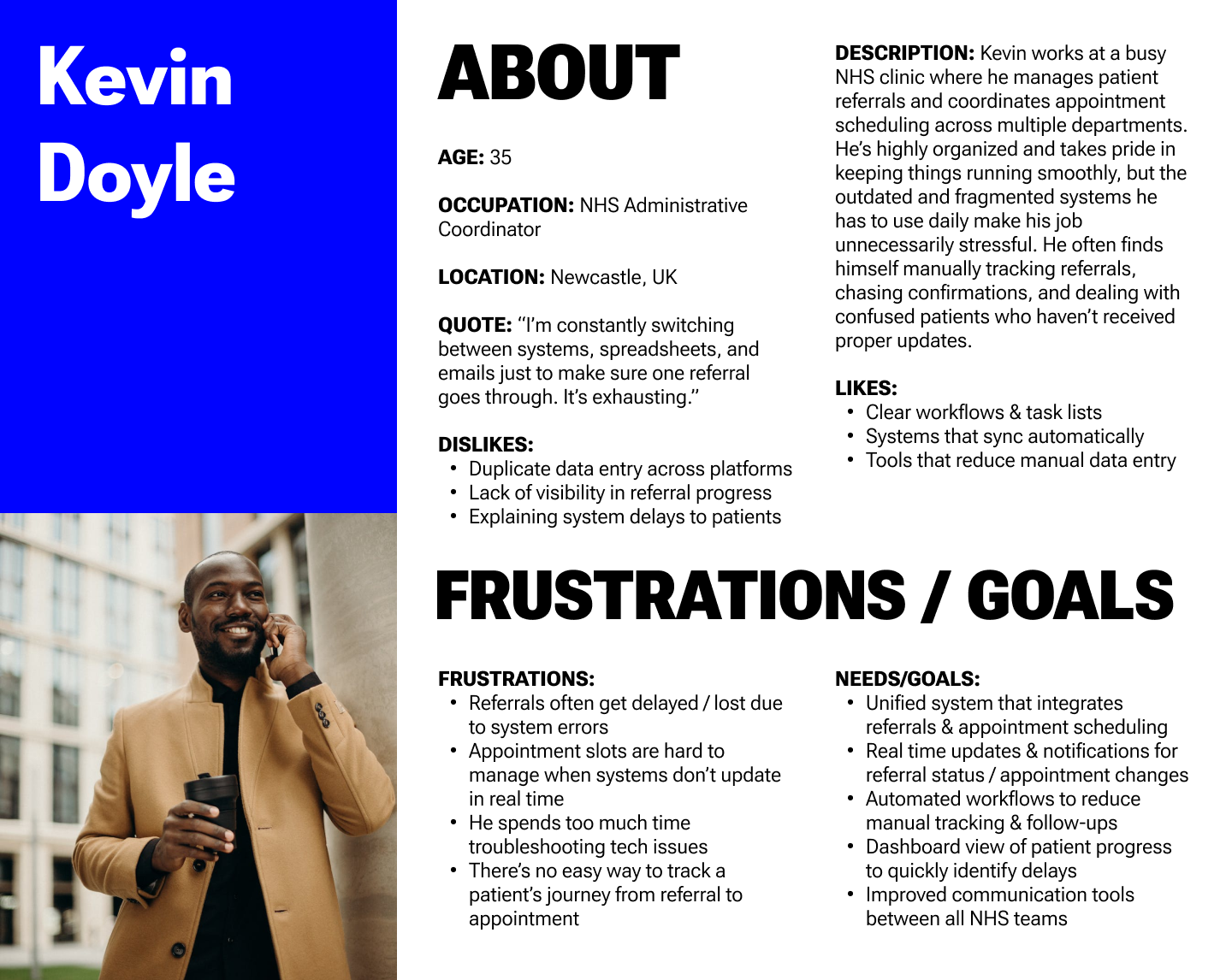
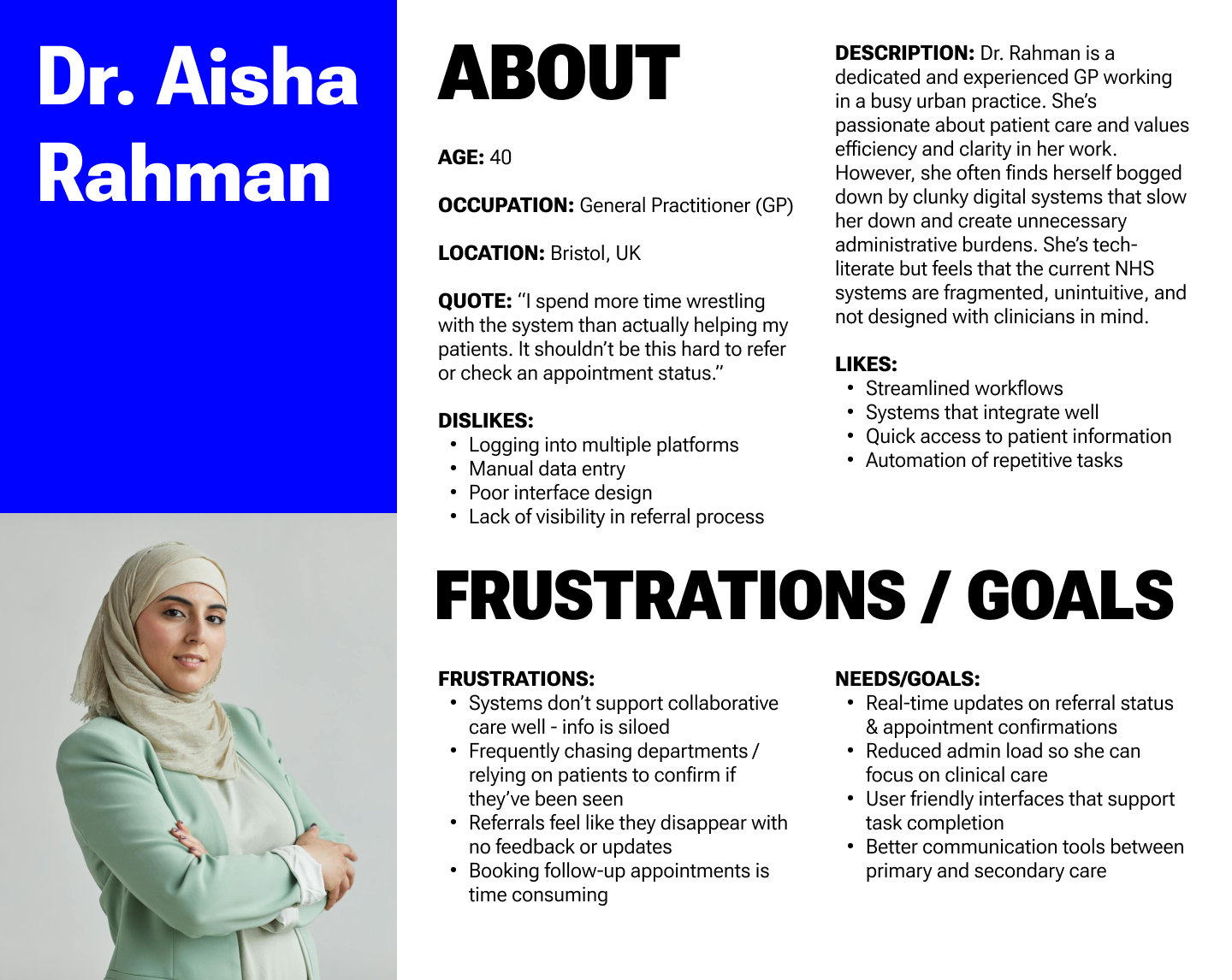
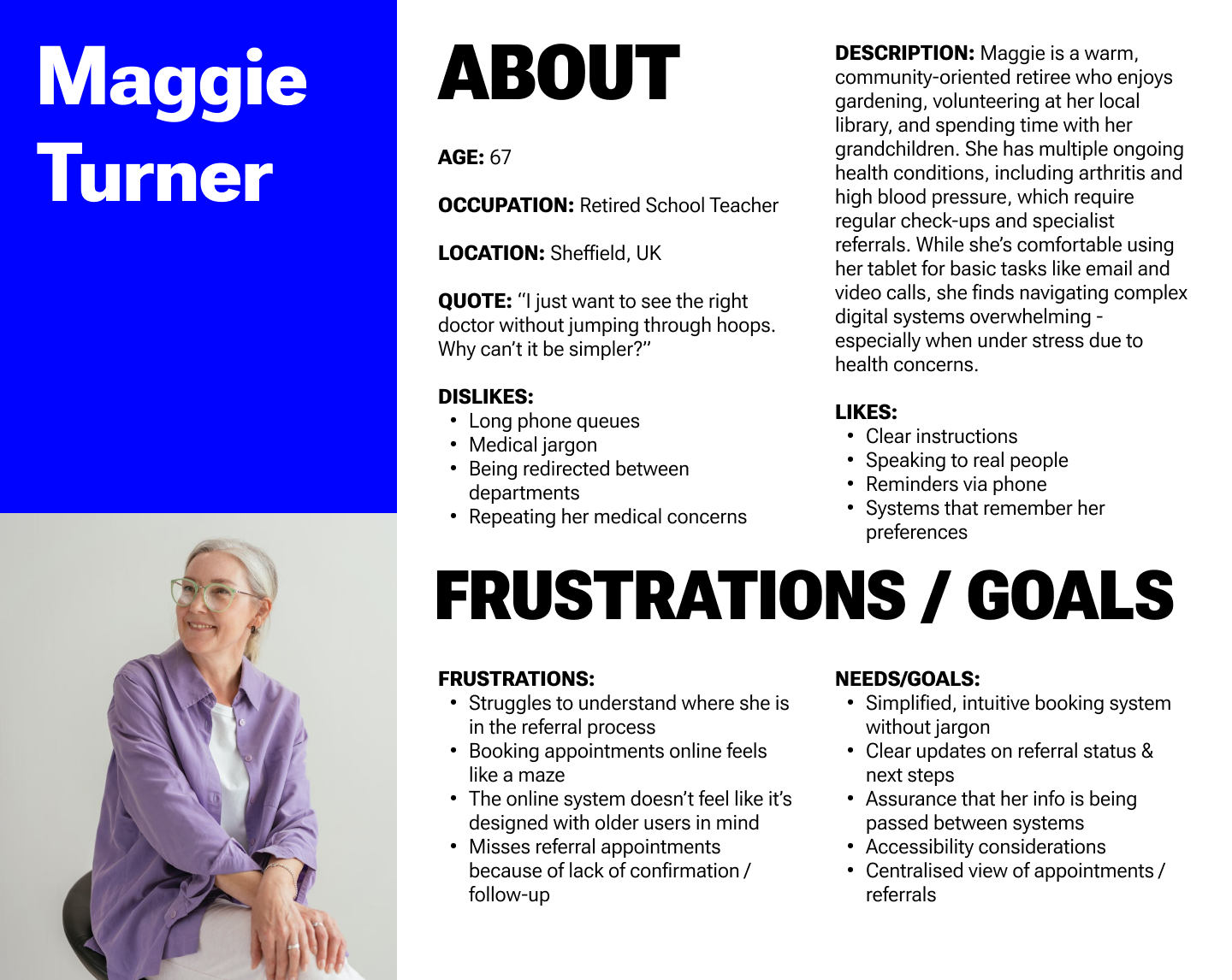
(Click to enlarge!)
Problem Statement
GPs, administrators, and patients within the NHS face continuous challenges when managing appointment bookings and specialist referrals. This is due to a lack of unity in the NHS’s digital systems and occasional reliance on analogue practices. This division between systems causes frustration across all user groups and unnecessary strain on NHS staff.
User Needs
- There needs to be one centralised system that all user groups can access.
- Following this, GPs and Admins should have integrated calendars that allow them to schedule appointments & availability.
- Patients need the option to choose how they receive communication.
- Patients need to be able to book GP appointments in advance.
Prototyping
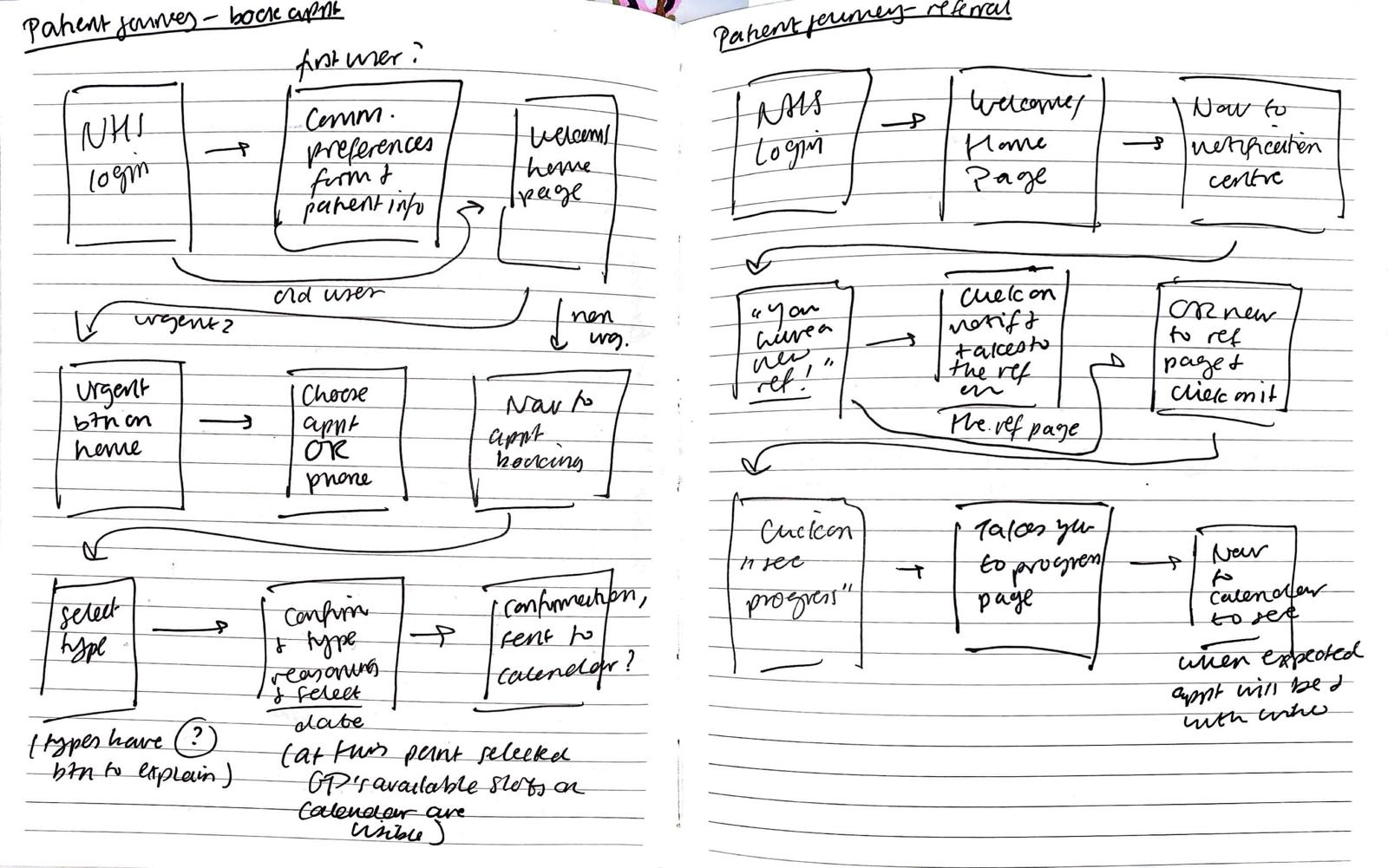
(Click to enlarge!)
To design my new NHS App, I create a very rough journey map to give myself an idea of how I wanted my users to traverse through it.

(Click to enlarge!)
Due to the short time frame of this project I was unable to conduct many iterations and could only focus my attention on the patient side of the solution. After some quick low fidelity sketches I produced my final product in Figma.

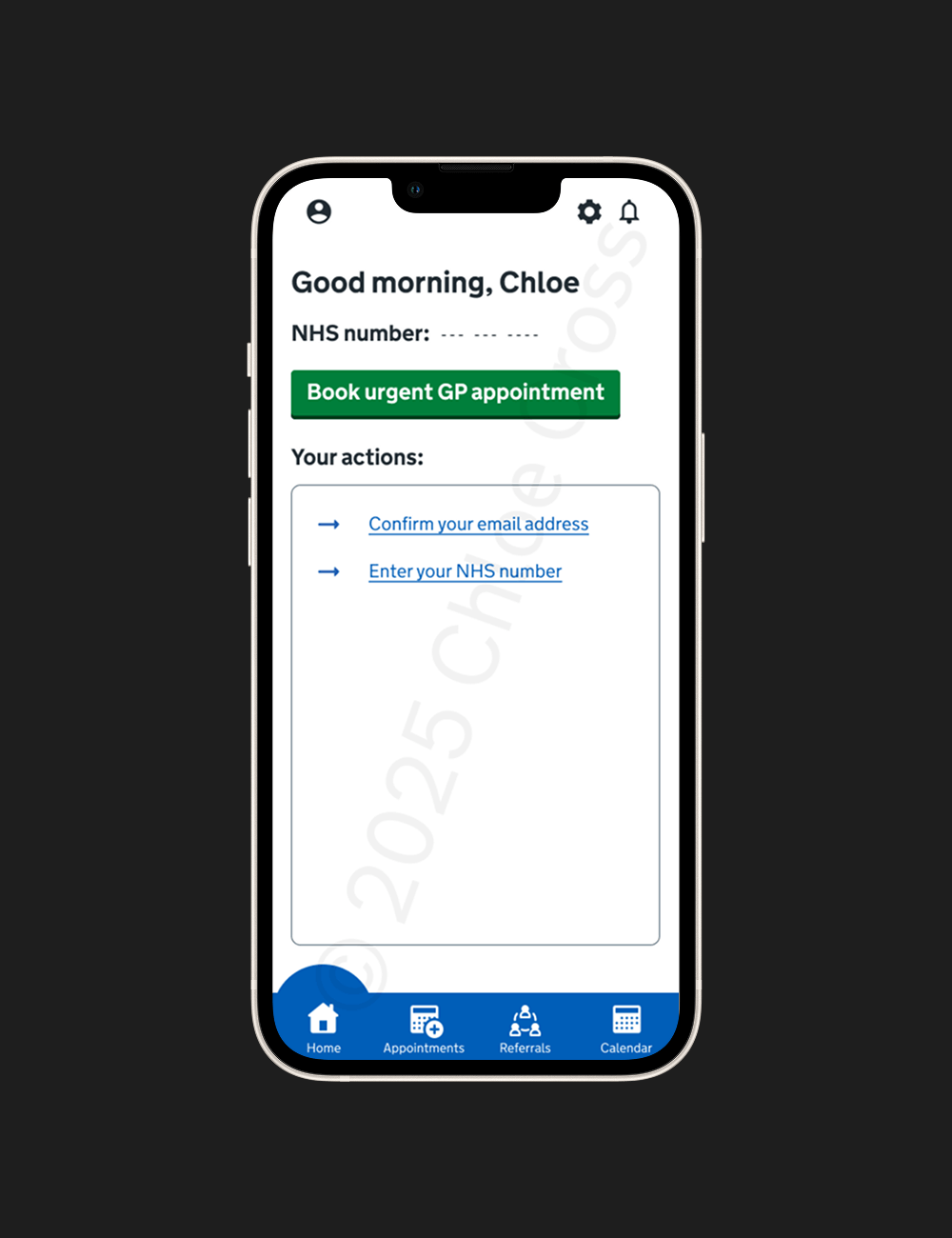

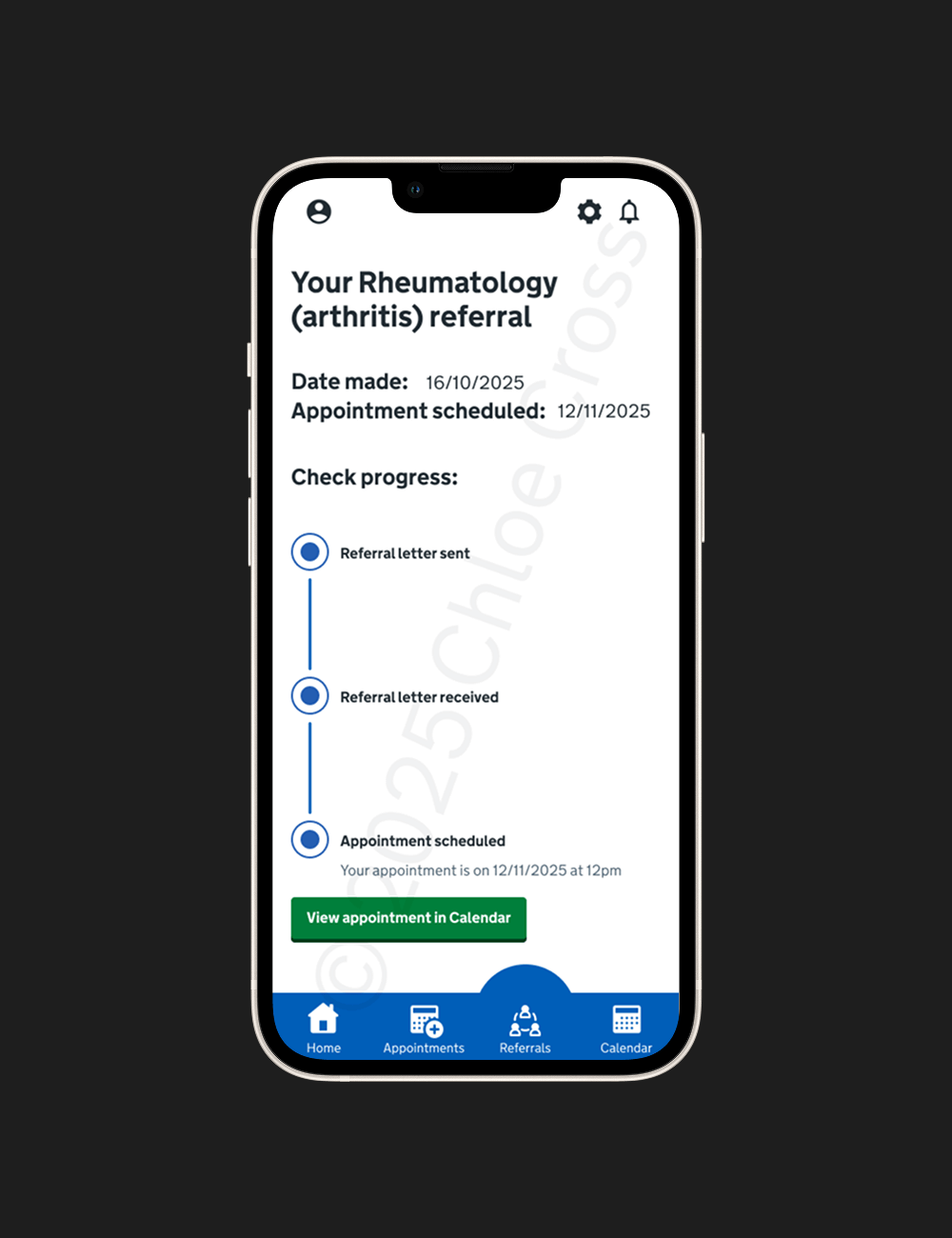

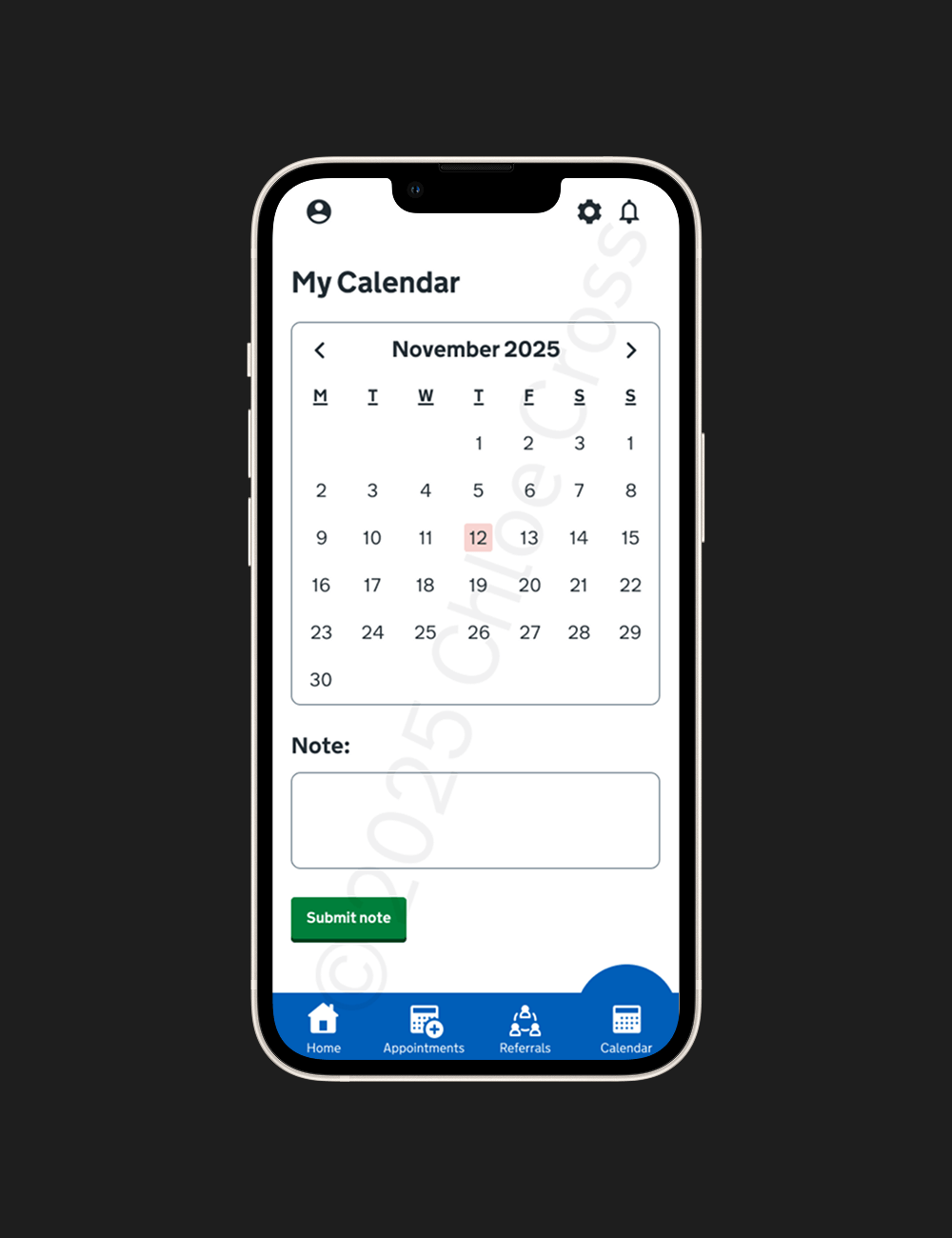
(Click to enlarge!)
Outcomes
I conducted a concurrent think aloud test with a few participants to gauge their opinions on my prototype. Here are the outcomes:
– Trust and recognition – Credibility was reinforced due to the recognisable NHS branding.
– Effective progress tracking – The referral progress format was easily understood by users.
– Clear status indicators – The tagging system was clear, and suggests a future traffic light structure.
Moving forward:
– An alternative, offline solution – Create to accommodate for users who cannot access / use a smartphone.
– Staff version of the app – Implement so patients and staff have a seamless experience managing appointments / referrals alongside each other.
– Strengthen confirmation – Users would benefit from additional booking confirmations, such as text or email.
Professional Feedback
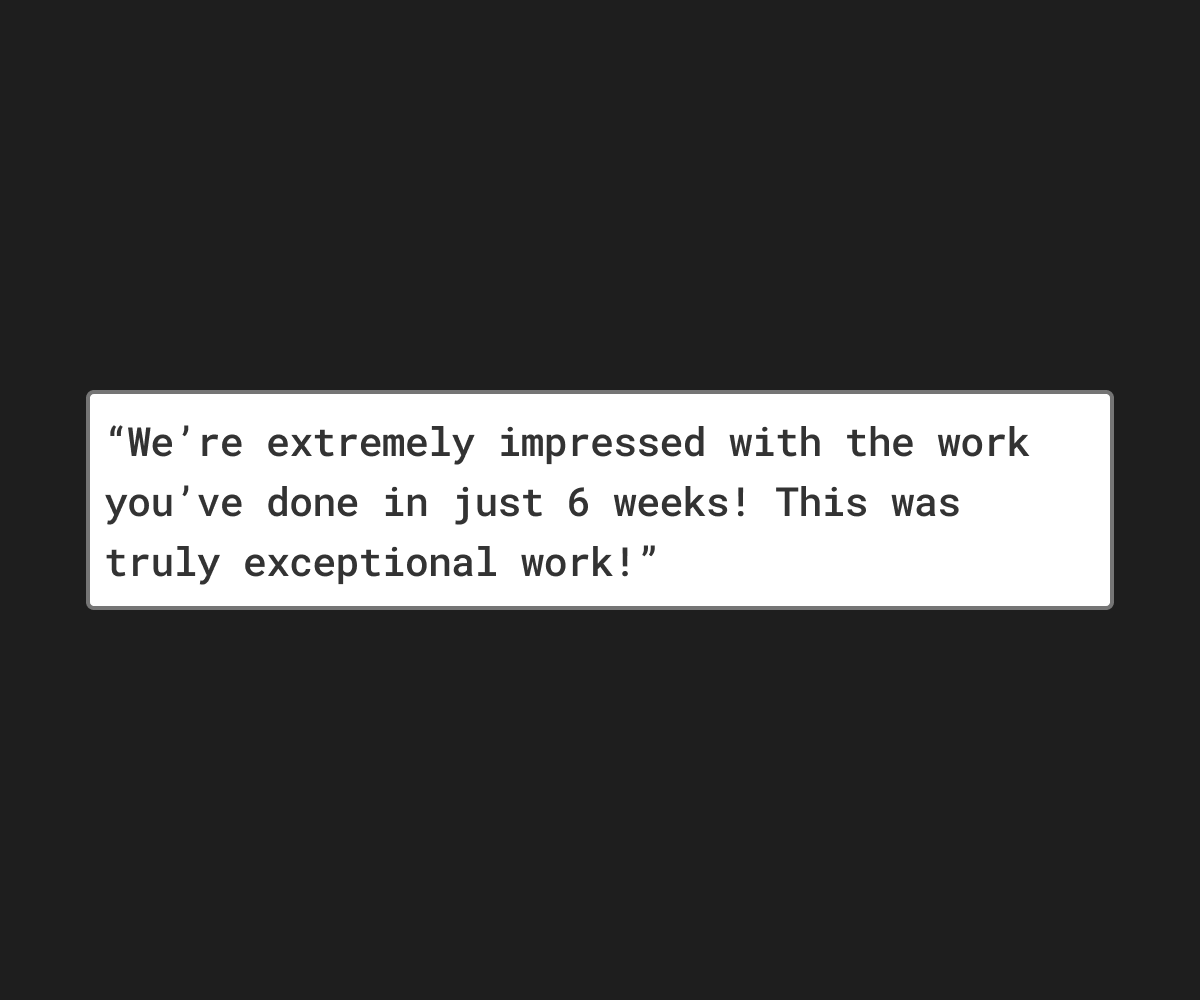
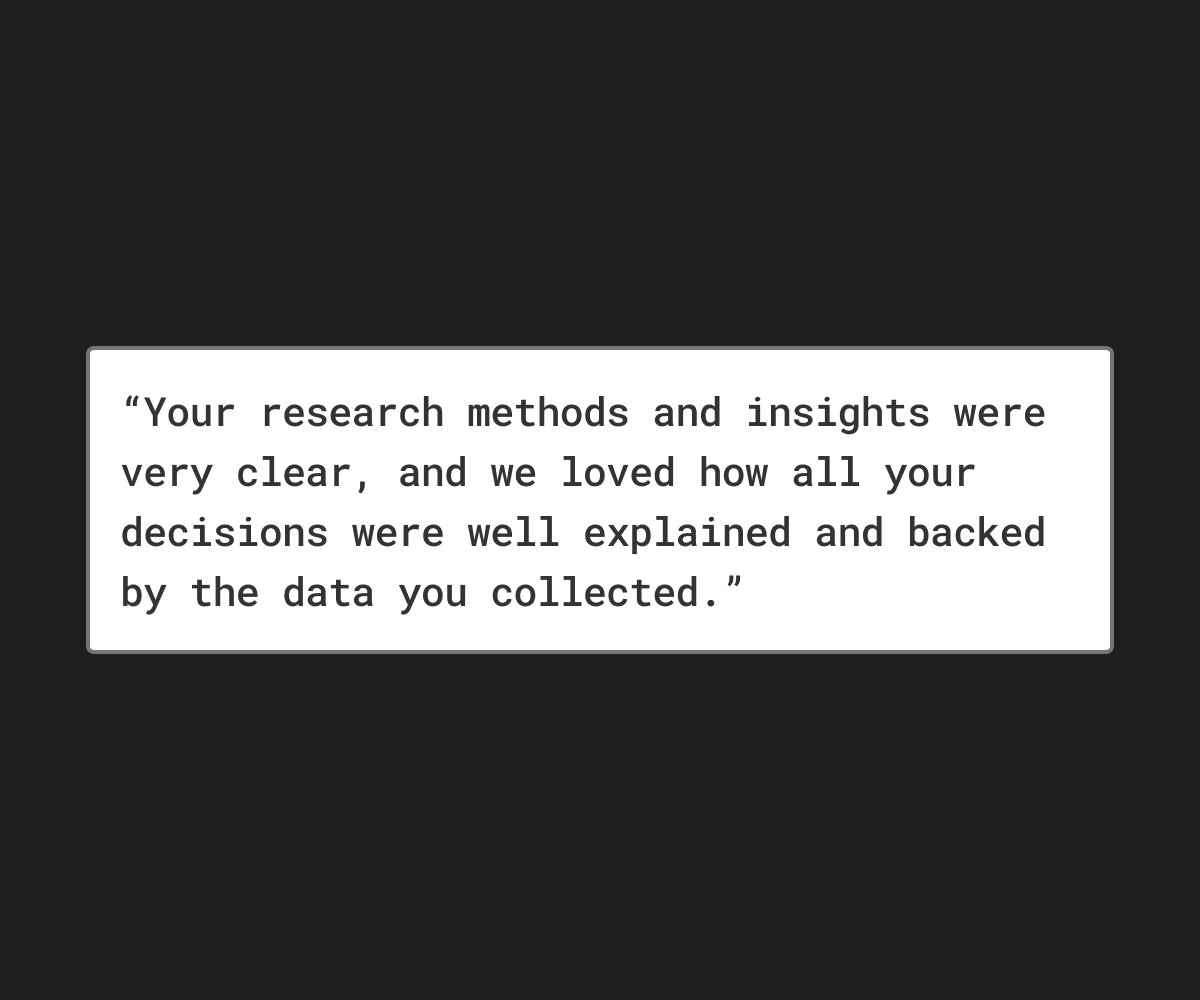
After the project was complete I received a certificate for winning the challenge, as well as feedback from the industry professionals who facilitated it.
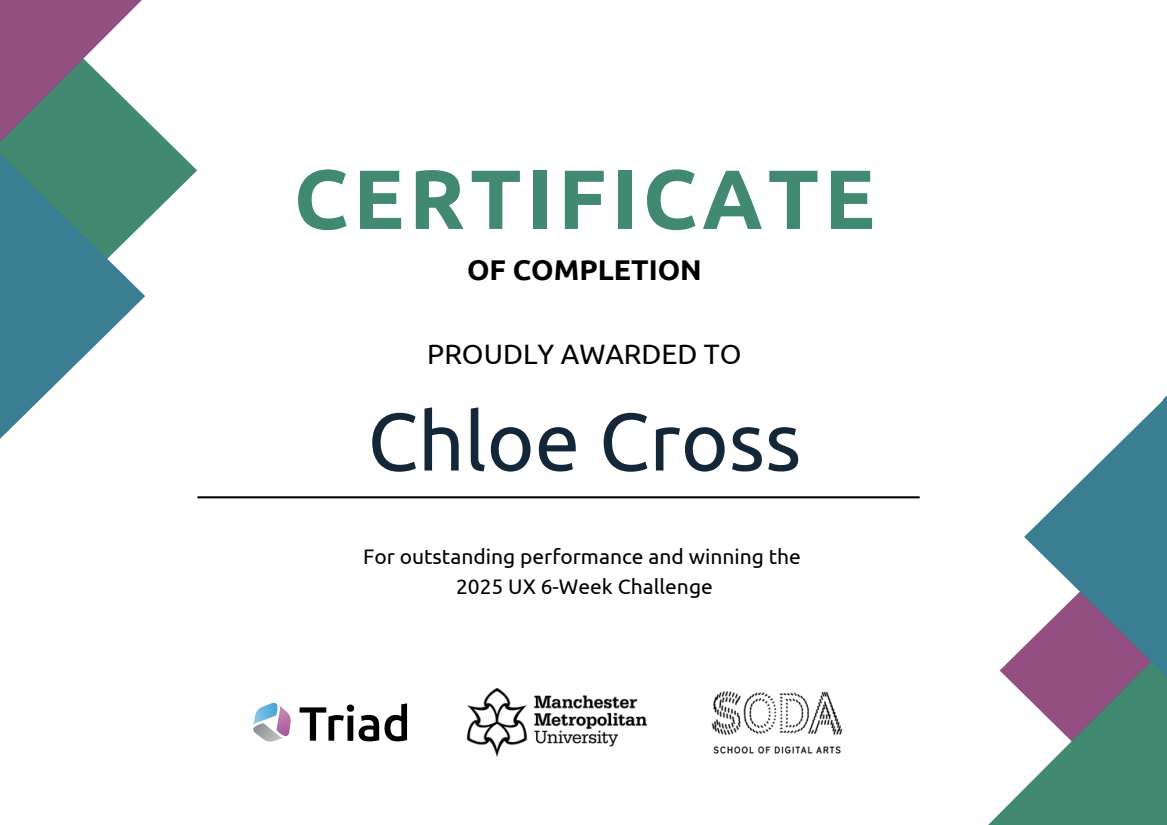


(Click to enlarge!)
 Chloe Crxxs